

How to Plan Ceiling Fans and Lighting for a Patio Cover
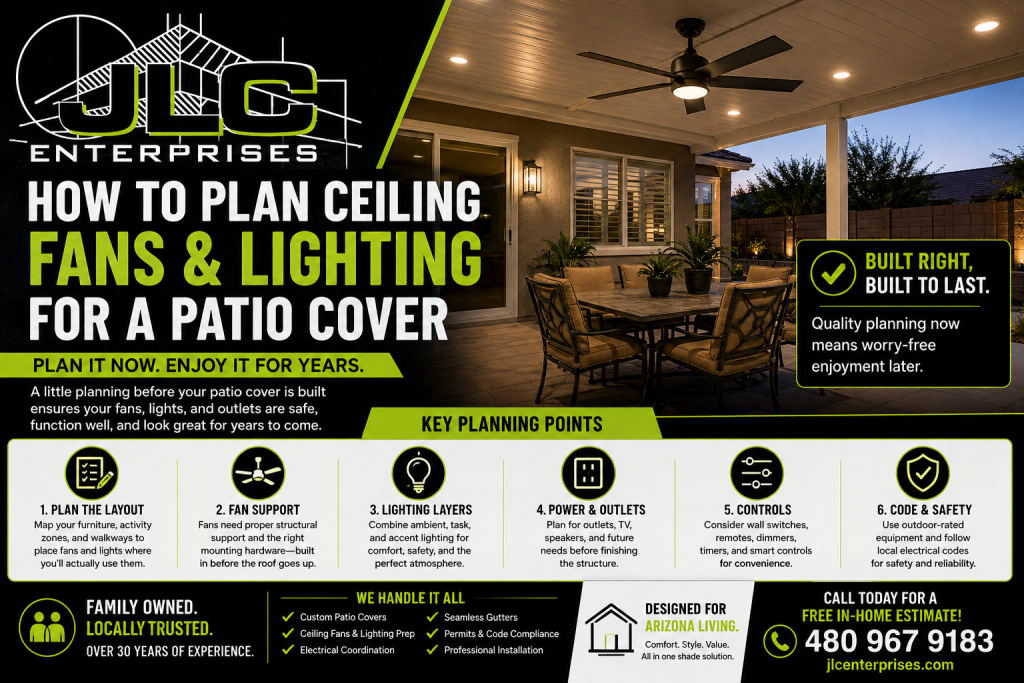
How to Plan Ceiling Fans and Lighting for a Patio Cover
A patio cover makes an Arizona backyard more usable, but shade alone does not finish the space. Homeowners often want light over the table, air movement above seating, and convenient power.
Those features should be planned before the cover is ordered. Adding them later can mean visible conduit, awkward fixture positions, limited controls, or cutting into a finished structure.
Decide How the Patio Will Be Used
Begin with furniture and activities. A dining table needs light directed toward the tabletop. An outdoor kitchen needs brighter task lighting around food preparation areas. A conversation space benefits from softer light and a fan positioned where people actually sit.
Draw the proposed furniture on a simple plan. Mark doors, windows, the grill, television wall, and main walking routes.
This prevents fixtures being centered where the furniture will not be.
Give a Ceiling Fan Proper Structural Support
A ceiling fan produces movement and vibration. It cannot be hung from an ordinary light box or a decorative roof panel that was never intended to carry it.
The structure needs a suitable support location, a listed fan box or mounting assembly, and enough clearance for the blades. Planning the beam and wiring positions before the panel layout is completed creates a cleaner and safer installation. Industry guidance also stresses that fan support and wiring routes should be decided early.
Fan size should match the covered area. One oversized fan may dominate a small patio, while a long outdoor room may work better with two smaller fans over separate seating zones.
Choose Equipment Rated for the Location
A covered patio is still outdoors. Humidity, wind driven rain, dust, heat, and insects can reach fixtures that appear protected.
Select fans, lights, boxes, switches, and other components with ratings appropriate for the exposure. A damp location fan may suit a protected ceiling, while a wet location product may be needed where rain can reach it. The electrician and product instructions should determine the correct rating.
Phoenix notes that electrical permits may be required when premises wiring is added or modified, even when other work is exempt.
Use More Than One Kind of Light
A single bright fixture in the center can leave the edges dark while creating glare below it. Better outdoor lighting usually combines several jobs.
Ambient lighting provides general visibility. Task lighting serves a grill, doorway, counter, or dining table. Accent lighting highlights a wall, column, plant, or architectural detail. Current outdoor design guidance recommends planning these layers together rather than lighting every surface equally.
Recessed fixtures can create a clean ceiling on a solid or insulated cover. Lattice structures may use fixtures mounted to beams, posts, or nearby walls. The roof style should be chosen with the desired lighting in mind.
Plan Controls Before Construction
Separate controls for fans and lights provide more flexibility than one switch operating everything. Consider wall switches, remote controls, dimming, timers, and smart controls before wiring begins.
Think about where the controls will be reached from the house and patio. A switch hidden behind an open door becomes irritating quickly.
This is also the time to discuss outdoor receptacles, a television connection, speakers, or future kitchen equipment. Not every feature needs to be installed immediately, but a sensible route for later wiring may be worth including.
Keep the Finished Patio Comfortable
Fans should move air across occupied areas without hanging too low or interfering with cabinets, heaters, or lights. Fixtures should provide useful light without shining into neighboring properties or reflecting harshly from windows.
Choose finishes that relate to the cover and home. A restrained set of well placed fixtures usually looks more intentional than unrelated products added over time.
Plan the Complete Patio With JLC Enterprises
JLC Enterprises installs custom solid, lattice, cantilevered, and 4K aluminum patio covers throughout the Phoenix Valley and East Valley. Call 480 967 9183 for a free in home estimate. Discuss fans, lighting, outlets, furniture placement, and future outdoor features early so the structure and electrical plan can work together from the beginning.
Live References
JLC Enterprises Patio Covers
https://www.jlcenterprises.com/patio-covers-phoenix-arizona.htm
JLC Enterprises 4K Aluminum Structures
https://www.jlcenterprises.com/4k-aluminum.htm
City of Phoenix Work Exempt From Permit Guide
https://www.phoenix.gov/content/dam/phoenix/pddsite/documents/trt/external/dsd_trt_pdf_00618.pdf
Alumawood Ceiling Fan Support Guide
https://www.try-tech.com/guides/alumawood-ceiling-fan-support-guide/
Bowen Electric: Outdoor Ceiling Fan Wiring
https://www.bowentx.com/blog/do-outdoor-ceiling-fans-require-special-wiring-what-you-need-to-know
Homes and Gardens: Planning Outdoor Lighting
https://www.homesandgardens.com/interior-design/how-to-plan-outdoor-lighting